|
ID |
Nickname |
Country / City |
Languages |
Taxonomies |
Comment |
Project / Group |
Map |
|
118145
|
kyp
|
United States
Aiea
|
|
|
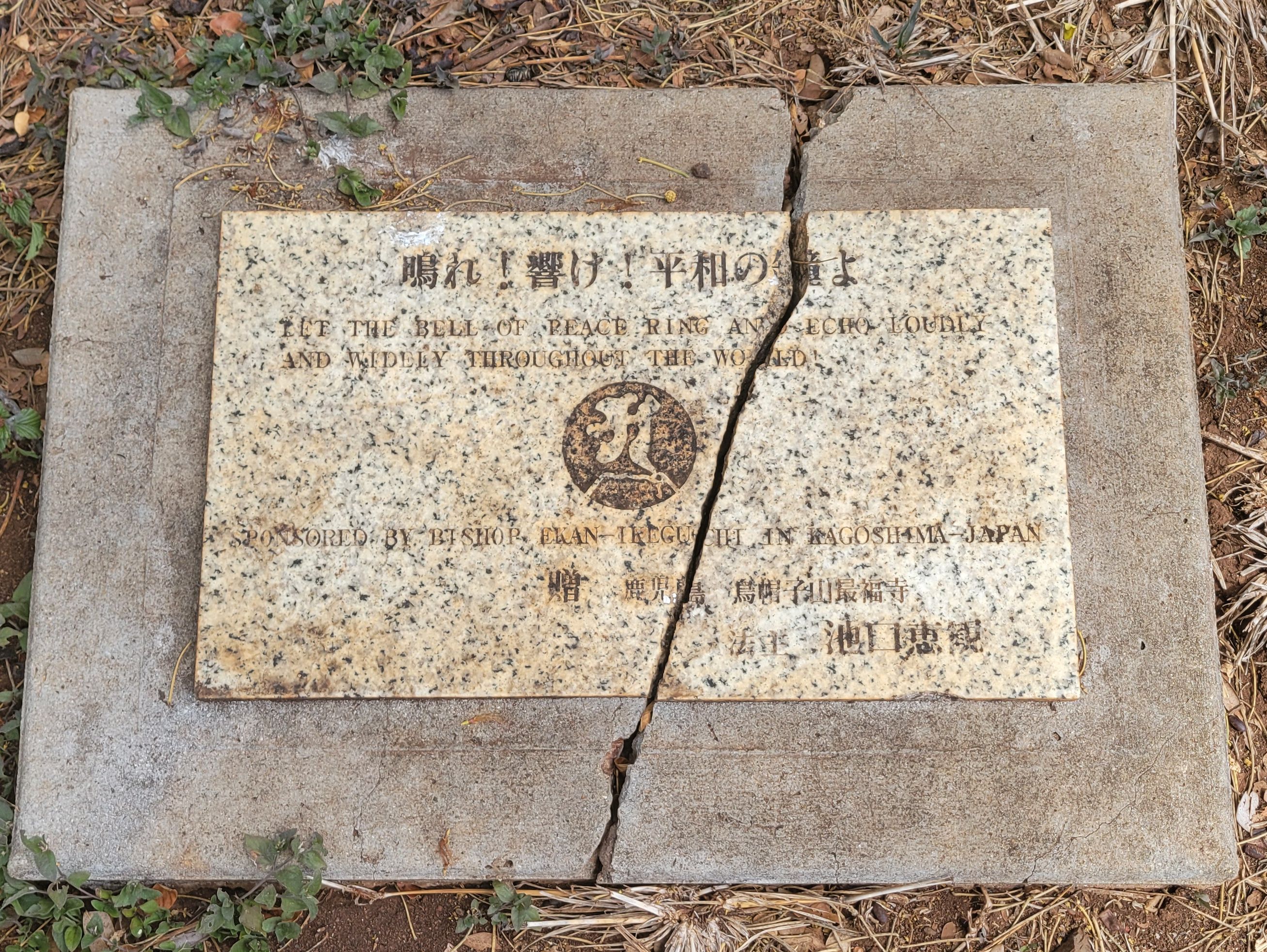
Japanese Peace Bell
Located on Neal S. Blaisdell Park

|
Multilingual Hawaiʻi
|
|
|
134147
|
Jeromyy
|
United States
Honolulu
|
|
|
—
|
Multilingual Hawaiʻi
|
|
|
134148
|
Jeromyy
|
United States
Honolulu
|
|
|
—
|
Multilingual Hawaiʻi
|
|
|
134149
|
Jeromyy
|
United States
Honolulu
|
|
|
—
|
Multilingual Hawaiʻi
|
|
|
134342
|
charrr
|
United States
Honolulu
|
|
|
Encountering a Japanese vending machine, I noticed that it had both Japanese and English on it. Noticing that it had both scripts, it made me realize how ingrained multilingualism is to our state and island. Not only does this serve the local community, but for tourists who can enjoy a bit of their culture here. Seeing just how often and frequently it is to have both Japanese and English script, and basically how normalized it is to have multiple languages in this state, made me aware of how this our public language and how valuable it is to create an inclusive, multilingual environment for everyone.
|
Multilingual Hawaiʻi
|
|
|
134343
|
charrr
|
United States
Waipahu
|
|
|
Seeing place names like Waikele, really emphasizes how important the Hawaiian language is to our culture. As you grow up, the norm becomes something that can be hidden in plain sight, or something that most people overlook, despite it being in our everyday language. However, as we think about multilingualism and think about the connection of the Hawaiian language and how it can shift our culture and communication, we can then use our town names as markers for history, culture, and diversity. We can view this public language as a way to honor the past and encourage language revitalization everyday.
|
Multilingual Hawaiʻi
|
|
|
134344
|
charrr
|
United States
Aiea
|
|
|
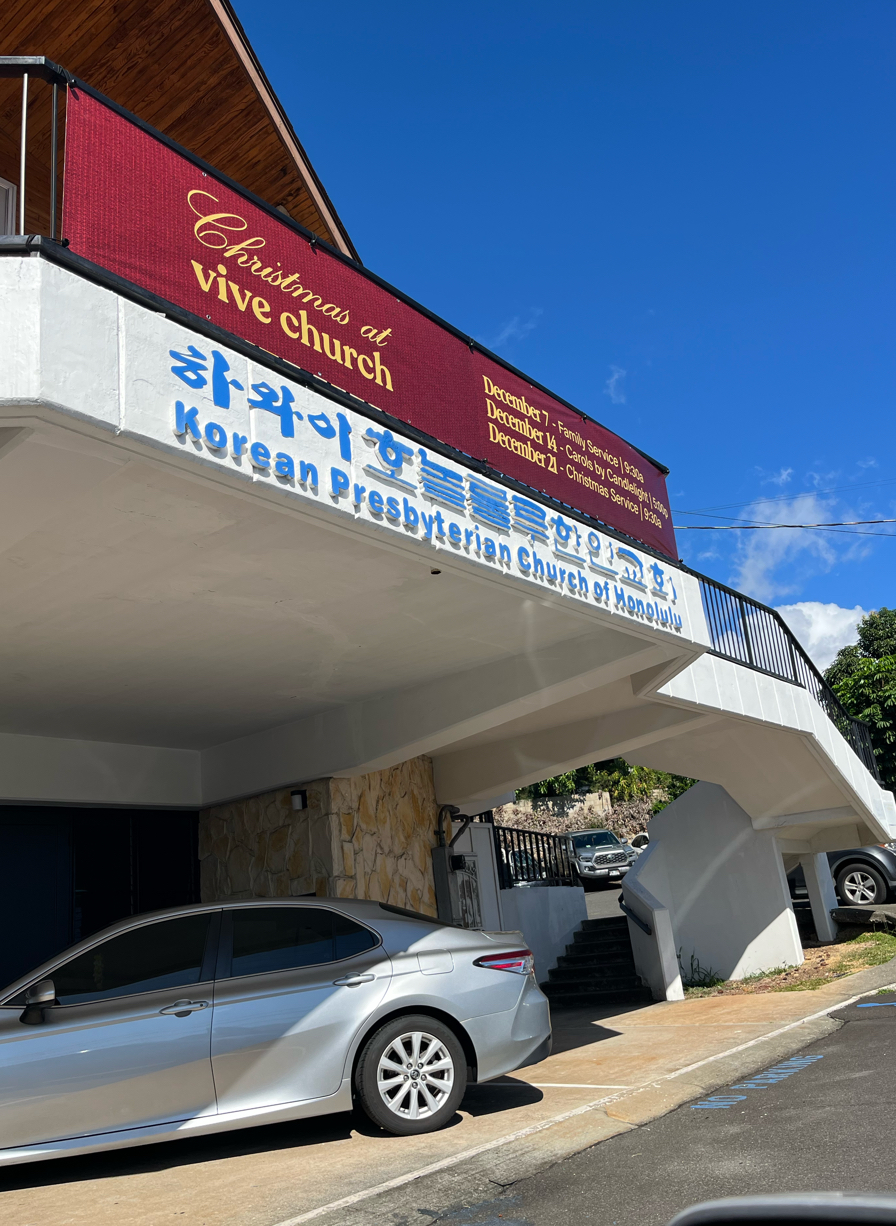
Walking past this town that had a sign in both Korean and English, made me aware of how multilingualism is a daily part of life when living in Hawai’i. As I continue to reflect about the different languages in Hawai’i, it made me realize how much of a melting pot our community is. It had the Korean language big and broad, showing that even in such an environment, these languages are the norm and are here to stay. Recognizing multilingualism in public spaces like this, is another way that language can connect others in a meaningful way, and expand across cultures.
|
Multilingual Hawaiʻi
|
|
|
147939
|
catherine
|
United States
Honolulu
|
|
|
While I was driving on Kapiolani Blvd, getting ready to turn onto Atkinson, I noticed this Korean restaurant, Chogajip, with its name written in English and “초가집” written next to it. After searching up what this means, I found that it says “thatched house,” which refers to a traditional Korean home. I found this interesting because it’s not only multicultural, but it’s also something only someone proficient in Korean would understand. The only English on the sign is “Korean Restaurant and Bar,” while the Korean wording conveys a homelike taste and environment. Seeing this bilingual signage sending different messages to different audiences shows how openly multicultural Hawaiʻi is.
|
Multilingual Hawaiʻi
|
|
|
147940
|
catherine
|
United States
Honolulu
|
|
|
While I was driving through the Ala Moana parking lot on the main level next to Target, it was the first time I noticed this “Mall Access” sign, even though I’ve driven past it many times. It caught my attention because the sign is in English, Japanese, Korean, and Chinese. Since this sign is in an older wing of the mall, it’s probably been here for many years without me noticing, which shows how long Hawai‘i has been a multicultural environment. Although Ala Moana is a touristy place, it was still interesting to see such a general sign in four languages. The Japanese, Korean, and Chinese all translate to “Mall Access.” Seeing multiple languages layered into a simple directional sign made me realize how deeply multilingualism is built into Hawai‘i’s public spaces, even in areas we overlook.
|
Multilingual Hawaiʻi
|
|
|
147941
|
catherine
|
United States
Honolulu
|
|
|
I took this photo on the main level of Ala Moana, right across from the Lanaʻi Food Court. The sign says “Mauka Wing,” which means “toward the mountains” in Hawaiian. I found it interesting how the mall uses Hawaiian words very frequently in its directional signs. Even the food court itself is named “Lānaʻi,” which is another island here. Seeing Hawaiian used in everyday signage and throughout such a large institution shows an effort to incorporate the language, even if it can sometimes feel a bit inauthentic. Still, noticing Hawaiian in these directional signs made me realize again how multicultural and multilingual Hawaiʻi is.
|
Multilingual Hawaiʻi
|
|
|
24839
|
|
United States
Honolulu
|
|
|
This is the design on a T-Shirt. Shaka Bruddah is Pidgin (Hawaiʻi Creole). Shaka refers to a hand sign popular in local Hawaiʻi which has multiple meanings, some of which are ‘thanks’ ‘hello’ ‘goodbye’ while Bruddah is roughly equivalent to English ‘brother’ as a term of endearment. The English translation for Shaka is ‘hang loose’ which is provided on the shirt design. The Hawaiian Islands are located above the Shaka which is flanked by two coconut trees. The bottom contains the words Aloha and Hawaii. This shirt seems to be meant for outsiders making the T-shirt symbolic-synthetic because ‘hang loose’ is not commonly used by locals but rather is used more by the surfer community in the continental US. KS
|
Multilingual Hawaiʻi
|
|
|
24870
|
|
アメリカ合衆国
Honolulu
|
|
|
I found this flyer on the bulletin board on campus. I suppose this is expressive sign because they use “kine” to share the local identity. SS
|
Multilingual Hawaiʻi
|
|
|
24897
|
|
United States
Waipahu
|
|
|
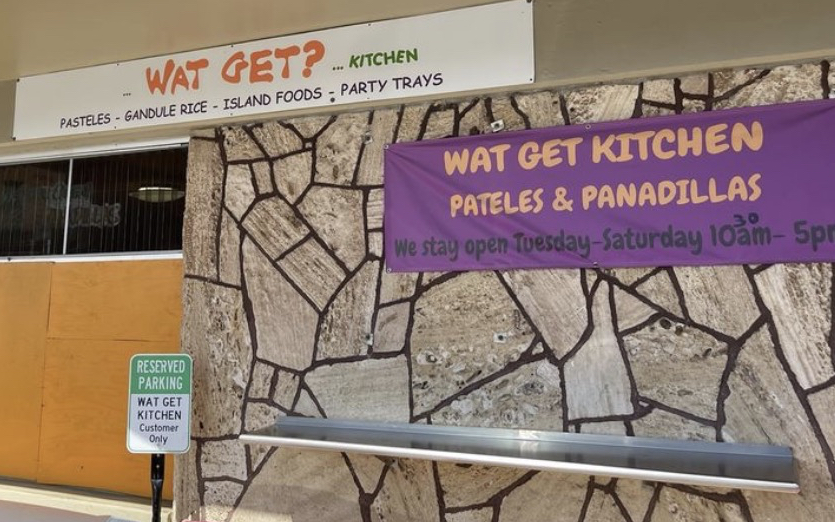
This is a restaurant sign. “Wat Get” is Pidgin (Hawaiian Creole) or “what is there” in English. Wat means “what” in English and “get” is derivative of Chinese from their sentence structure and has the meaning from this sentence “there is/is there.” I believe this sign is an example of symbolic-authentic because this is a common thing locals say and usually only locals get food from here. C.R.
|
Multilingual Hawaiʻi
|
|
|
24948
|
|
United States
Waipahu
|
|
|
This is a shirt that says so urusai. There is also the meaning of urusai below in English which say irritating. Urusai is a Japanese word that also means annoying or noisy there is also Japanese characters. This Symbolic-synthetic. R.N.
|
Multilingual Hawaiʻi
|
|
|
24949
|
|
United States
Waipahu
|
|
|
This is a shirt that says Chee hoo on it this is a (hwc) slang that locals most likely use at a football game or to up lift the mood. This is symbolic-authentic. R.N.
|
Multilingual Hawaiʻi
|
|
|
24950
|
|
United States
Waipahu
|
|
|
This is a shirt that says Bumbai with the meaning below which is in Hawaii creole “layers brah”. Brah is short for “braddah” which also means “brother” in English. This is symbolic-authentic. R.N.
|
Multilingual Hawaiʻi
|
|
|
24951
|
|
United States
Honolulu
|
|
|
This is a shirt with a Shaka logo on it and it says Howzit brah (hwc). Howzit also means “how is it?” in English. Brah is short for “braddah” which means “brother” in English. This is symbolic-authentic. R.N.
|
Multilingual Hawaiʻi
|
|
|
24952
|
|
United States
Waipahu
|
|
|
This is a shirt that says rajah on it. Rajah (hwc) means “roger” in English. So the word rajah is a term used to confirm something. The “Jah” is in all caps because it comes from Bob Marley’s song Jah live, which is why the letters are in red, yellow, and green. Most locals likes Bob Marley and we commonly use the word rajah. This is symbolic-authentic. R.N.
|
Multilingual Hawaiʻi
|
|
|
24953
|
|
United States
Waipahu
|
|
|
This is a cooler bag that says “Malama Da ‘Aina” on it. Malama and ‘Aina is in Hawaiian. Malama means “respect”, Da is suppose to be ka in Hawaiian but it is a linker which means “the” and ‘Aina means “land”. This commonly used amongst locals and some non-locals when someone litters or probably one the few things that is taught to tourist when they fly down for vacation. This is symbolic-authentic. R.N.
|
Multilingual Hawaiʻi
|
|
|
24954
|
|
United States
Kapolei
|
|
|
This is a card that says “ey! Dis card no stay late” (hwc). In English this says wait! This card is not late. In other words the person is saying that they are not giving the card, after your birthday is passed. This is symbolic-authentic. R.N.
|
Multilingual Hawaiʻi
|
|