Deutsch
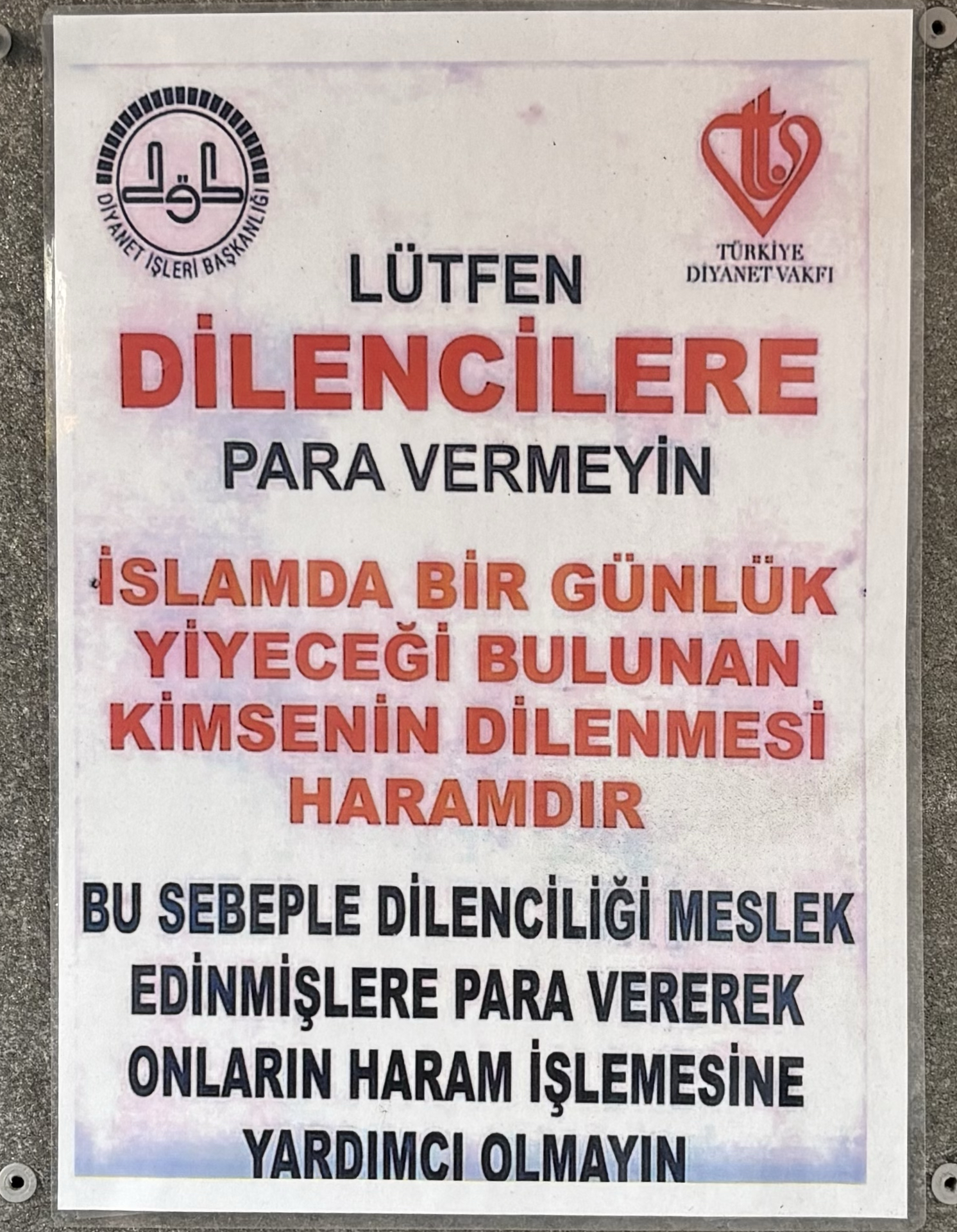
Das Zeichen richtet sich primär an türkischsprachige Gemeindemitglieder und stellt eine Top-down-Initiative einer religiös-institutionellen Autorität (Diyanet) dar. Es bezeichnet eine regulatorische sowie religiös-normative Funktion und kann dem Typ institutionelle Verhaltens- bzw. Verbotsbeschilderung zugeordnet werden. Verwendet wird ausschließlich Türkisch („Lütfen dilencilere para vermeyin …“), wodurch eine gezielte Ansprache einer spezifischen sprachlich-religiösen Gemeinschaft erfolgt. Auffällig ist die starke moralisch-religiöse Rahmung der Botschaft, indem das Verhalten nicht nur reguliert, sondern explizit religiös bewertet wird („haramdır“), wodurch normative Autorität über religiöse Legitimation hergestellt wird. Hinsichtlich der Materialität und des Modus handelt es sich um ein gedrucktes, fest angebrachtes Schild im institutionellen Kontext. Die verwendete Schrift ist lateinisch; orthographische Abweichungen sind nicht zentral, vielmehr steht die diskursive Struktur im Vordergrund, die religiöse Argumentation mit Verhaltensregulierung verknüpft.
English
The sign is primarily directed at Turkish-speaking community members and represents a top-down initiative by a religious institutional authority (Diyanet). It denotes a regulatory as well as religious-normative function and can be classified as institutional behavioral or prohibition signage. The language used is exclusively Turkish (“Please do not give money to beggars …”), resulting in a targeted address to a specific linguistic and religious community. Notably, the message is strongly framed in moral and religious terms, as the behavior is not only regulated but explicitly evaluated through religious judgment (“haram”), thereby establishing normative authority through religious legitimation. In terms of materiality and mode, it consists of a printed, fixed sign in an institutional setting. The script used is Latin; orthographic features are not central here, as the discursive structure foregrounds the link between religious reasoning and behavioral regulation.
Visible Turkish
134872
CriblordGandalf
Germany
München
—
17368
Germany
München
Herausforderung Spazionierung
TypeWalk
156120
Deutschland
München
Deutsch
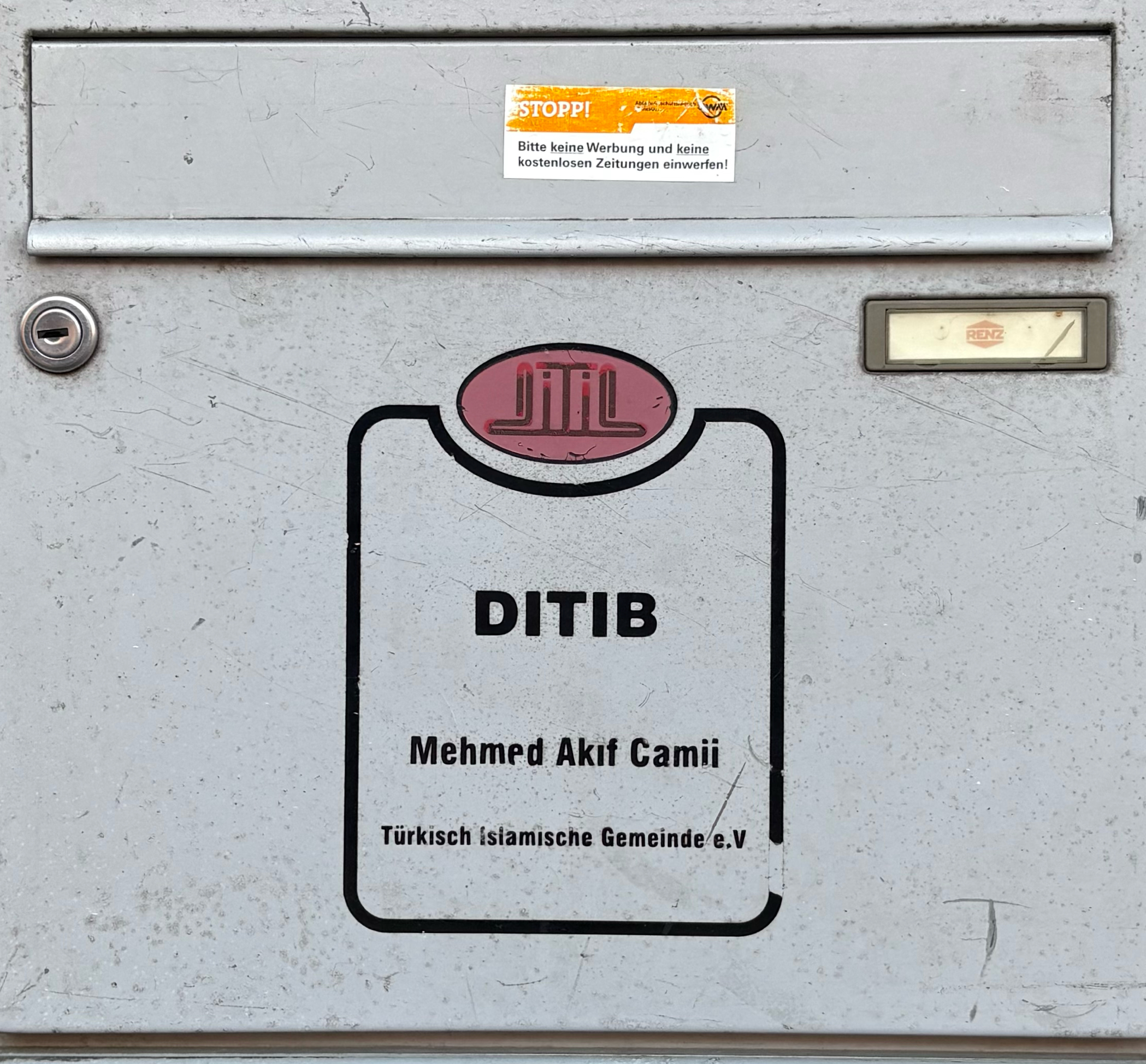
Das Zeichen richtet sich an ein breites öffentliches Publikum und stellt eine Top-down-Initiative einer religiösen Organisation (DITIB) dar. Es bezeichnet eine informative sowie institutionell-identifizierende Funktion und kann dem Typ institutionelle Beschilderung zugeordnet werden. Verwendet werden Deutsch („Türkisch Islamische Gemeinde e.V.“) sowie ein türkisch geprägter Eigenname („Mehmed Akif Camii“), wodurch eine spezifische Form institutioneller Mehrsprachigkeit entsteht. Deutsch fungiert als offizielle und rechtlich-administrative Sprache der Institution im deutschen Kontext, während der türkische Bestandteil primär identitätsstiftend wirkt und die religiös-kulturelle Zugehörigkeit markiert. Auffällig ist die Verwendung einer historisch-osmanisch anmutenden Namensform („Mehmed“ statt „Mehmet“), die eine symbolische Verbindung zu religiös-kultureller Tradition herstellt. Hinsichtlich der Materialität und des Modus handelt es sich um ein fest installiertes Schild an einer Gebäudestruktur (Briefkasten/Haustafel). Die verwendete Schrift ist lateinisch; orthographische Besonderheiten sind weniger funktional als vielmehr symbolisch motiviert und verweisen auf eine bewusste stilistische Wahl im Spannungsfeld von Sprache und Tradition.
English
The sign is directed at a broad public audience and represents a top-down initiative by a religious organization (DITIB). It denotes an informational and institutionally identificatory function and can be classified as institutional signage. The languages used include German (“Türkisch Islamische Gemeinde e.V.”) and a Turkish-derived proper name (“Mehmed Akif Camii”), resulting in a specific form of institutional multilingualism. German functions as the official and administrative language within the German context, while the Turkish element primarily serves as an identity marker, signaling religious and cultural affiliation. Notably, the use of the historically Ottoman-influenced name form (“Mehmed” instead of “Mehmet”) establishes a symbolic connection to religious-cultural tradition. In terms of materiality and mode, it consists of a fixed sign attached to a building structure (mailbox/entrance panel). The script used is Latin; orthographic features are less functional and rather symbolically motivated, reflecting a deliberate stylistic choice at the intersection of language and tradition.
 Lingscape