Lingscape
Lingscape Public Image Repository
About the project | Project list | Taxonomies | License

Filter data

ID Nickname Country / City Languages Taxonomies Comment Project / Group Map
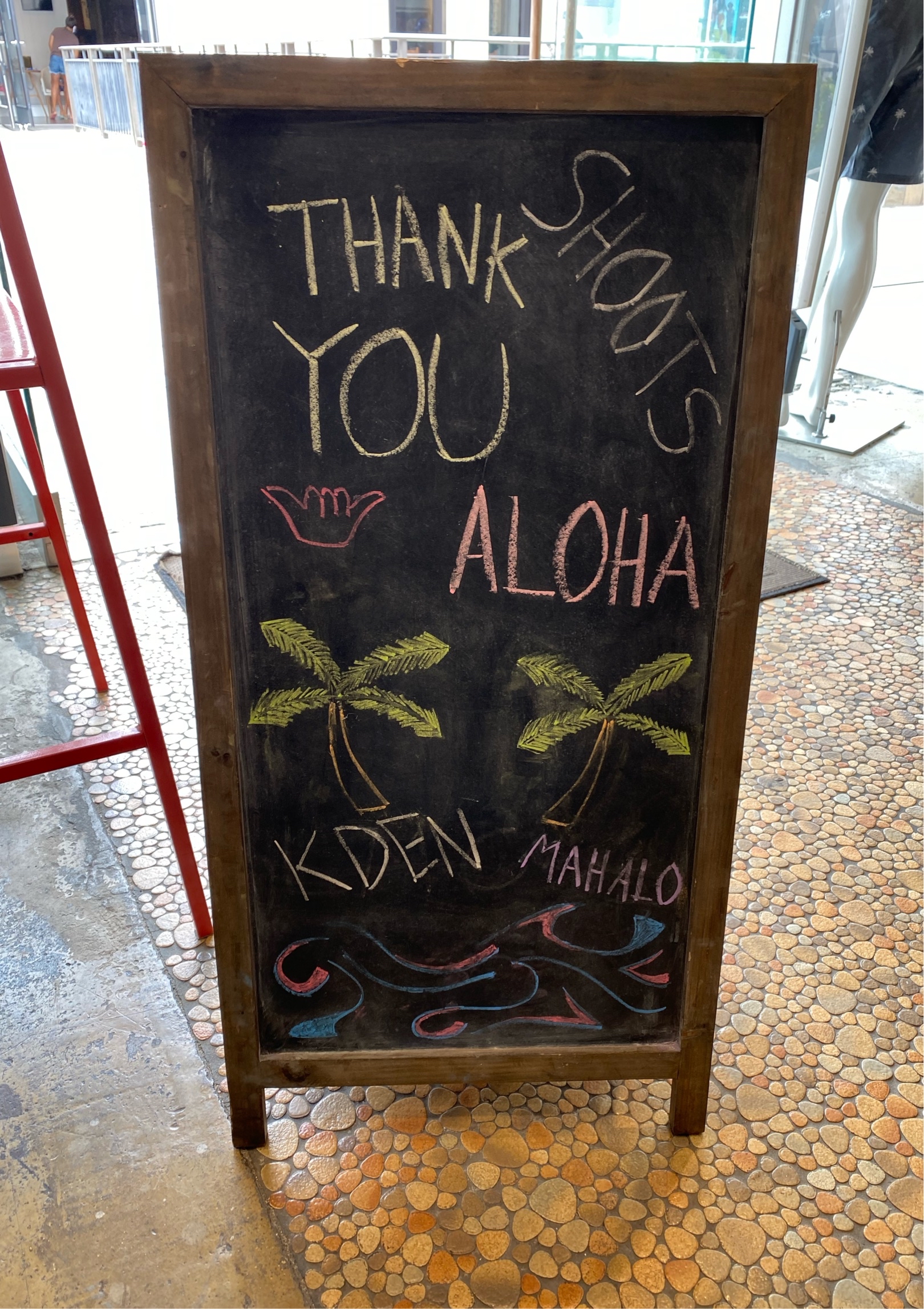
Pin 3554 United States Lahaina
English (English) Hawai‘i (Hawaiian)
Pin 71138 United States Weslaco
English (English)
Letreros en el RGV
Pin 7394 United States Chicago
العربية (Arabic) English (English) فارسی (Farsi)
Pin 11746 United States Tucson
Español (Spanish)
This is a street sign for a historic neighborhood in Tucson. It translates to “garden street”. Amanda L
Pin 92642 United States Chapel Hill
Other language
Pin 44002 United States Aiea
English (English) Hawai‘i (Hawaiian)
This is an example of Hawaiian, giving many words that are pretty central to local/Hawaiian culture. It’s a painted plaque so probably a more permanent decoration. It’s probably an appealing item for both locals and tourists. NIP Multilingual Hawaiʻi
Pin 46050 United States Kaneohe
Hawai‘i (Hawaiian)
SU: Check Up #2 - What language is used on the sign?: The language that is used on the sign is Hawaiian. - How are the language presented?: The language is presented in big, thin, white letters. - Who is the audience?: The audience is the general public but it is mainly for locals. - What is the domain?: The domain is the back of a car used as a bumper sticker. - What is sign telling people?: The sign might be telling people to always live with aloha. Kapu Aloha honors the energy and life found in aloha - compassion - and helps us focus on its ultimate purpose and meaning. - Why is Hawaiian being used here?: Hawaiian is being used here to catch the attention of the locals. To send out the message, especially to them, that it is important to live with aloha anywhere and everywhere. Multilingual Hawaiʻi
Pin 47074 United States Kaneohe
English (English) Filipino (Filipino) Hawai'i Creole (Hawaiian Creole English)
SU: Check Up #3 - What languages are used on the sign?: The languages that are used on the sign is Hawai’i Creole or Pidgin, Filipino, and English. - How is the language presented?: All languages are presented in all white but Hawai’i Creole is presented in smaller bolded letters, Filipino is presented in bigger bolded letters, and English is presented in skinny letters. - Who is the audience?: The audience is the general public, but would probably be more directed towards locals. - What is the domain?: The domain is on the side of a dessert store in a public mall. - What is the sign telling people?: The sign is telling people that this is THE ice cream place, as halo halo is a Filipino dessert that involves ice cream. - Why is Pidgin/Hawaiian being used here?: Pidgin is being used here because it is a clever way to catch the attention of people who walk by this sign, especially ones who are locals. Multilingual Hawaiʻi
Pin 51170 United States Boulder
English (English) Español (Spanish)
Taylor Guel Colorado Spanish
Pin 52962 United States Tucson
English (English) Español (Spanish)
Pin 65250 United States Houston
English (English) Other language
Letreros en el RGV
Pin 131042 United States Seattle
English (English)
Pin 131299 United States Seattle
English (English)
I thought this was cool because a person in my community has a business!
Pin 3555 United States Lahaina
English (English) Hawai‘i (Hawaiian)
Pin 71139 United States Chicago
English (English) فارسی (Farsi)
Pin 7395 United States Chicago
English (English) 한국말 (Korean)
Japanese or Korean is phonetic?
Pin 11747 United States Tucson
English (English) Español (Spanish)
El Merendero es la restuante los especiales es mexicana y mariscos comida en 12th ave. Los especiales de mariscos es cocido lunes-sabado.
Pin 147939 catherine United States Honolulu
English (English) 한국말 (Korean)
While I was driving on Kapiolani Blvd, getting ready to turn onto Atkinson, I noticed this Korean restaurant, Chogajip, with its name written in English and “초가집” written next to it. After searching up what this means, I found that it says “thatched house,” which refers to a traditional Korean home. I found this interesting because it’s not only multicultural, but it’s also something only someone proficient in Korean would understand. The only English on the sign is “Korean Restaurant and Bar,” while the Korean wording conveys a homelike taste and environment. Seeing this bilingual signage sending different messages to different audiences shows how openly multicultural Hawaiʻi is. Multilingual Hawaiʻi
Pin 152803 ACorreia United States Providence
Español (Spanish)
RILL
Pin 89571 United States Fort Worth
Spanish language for lawyers- car accident Spanish as vice