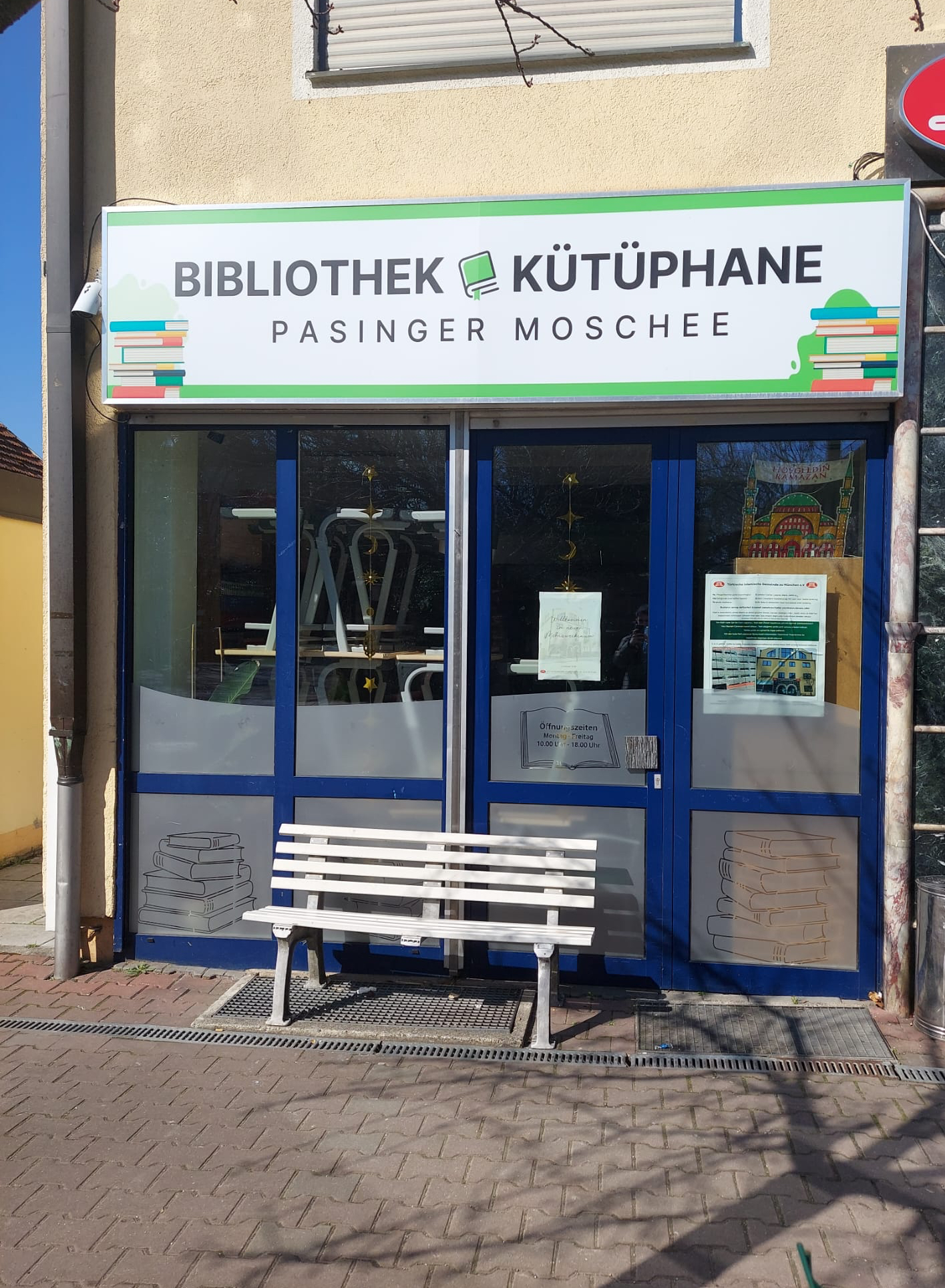
Das Zeichen richtet sich sowohl an deutschsprachige als auch an türkischsprachige Gemeindemitglieder und stellt eine Top-down-Initiative einer religiösen Institution dar. Es bezeichnet eine informative sowie institutionelle Funktion und kann dem Typ funktionale, institutionelle und identitätsbezogene Beschilderung zugeordnet werden. Verwendet werden Deutsch („Bibliothek“) und Türkisch („Kütüphane“) in paralleler und gleichrangiger Anordnung, ohne erkennbare Hierarchisierung, was auf eine institutionell verankerte Zweisprachigkeit hinweist. Im Gegensatz zu rein symbolischer Mehrsprachigkeit erfüllt die Beschilderung eine klar funktionale Rolle im Sinne von Orientierung und Zugang, wirkt jedoch zugleich identitätsstiftend. Hinsichtlich der Materialität und des Modus handelt es sich um ein fest installiertes Schild im Innen- oder Eingangsbereich der Institution. Die verwendete Schrift ist lateinisch.
English:
The sign is directed at both German-speaking and Turkish-speaking community members and represents a top-down initiative by a religious institution. It denotes an informational and institutional function and can be classified as functional, institutional, and identity-related signage. The languages used are German (“Bibliothek”) and Turkish (“Kütüphane”), arranged in a parallel and non-hierarchical manner, indicating an institutionally embedded bilingualism. In contrast to purely symbolic multilingualism, the signage fulfills a clearly functional role in terms of orientation and access, while simultaneously contributing to identity construction. In terms of materiality and mode, it consists of a fixed sign located inside or at the entrance of the institution. The script used is Latin.
Visible Turkish
93771
Deutschland
Saarbrücken
—
160075
Questoph
Deutschland
Gschwend
—
161867
Andrea
Deutschland
München
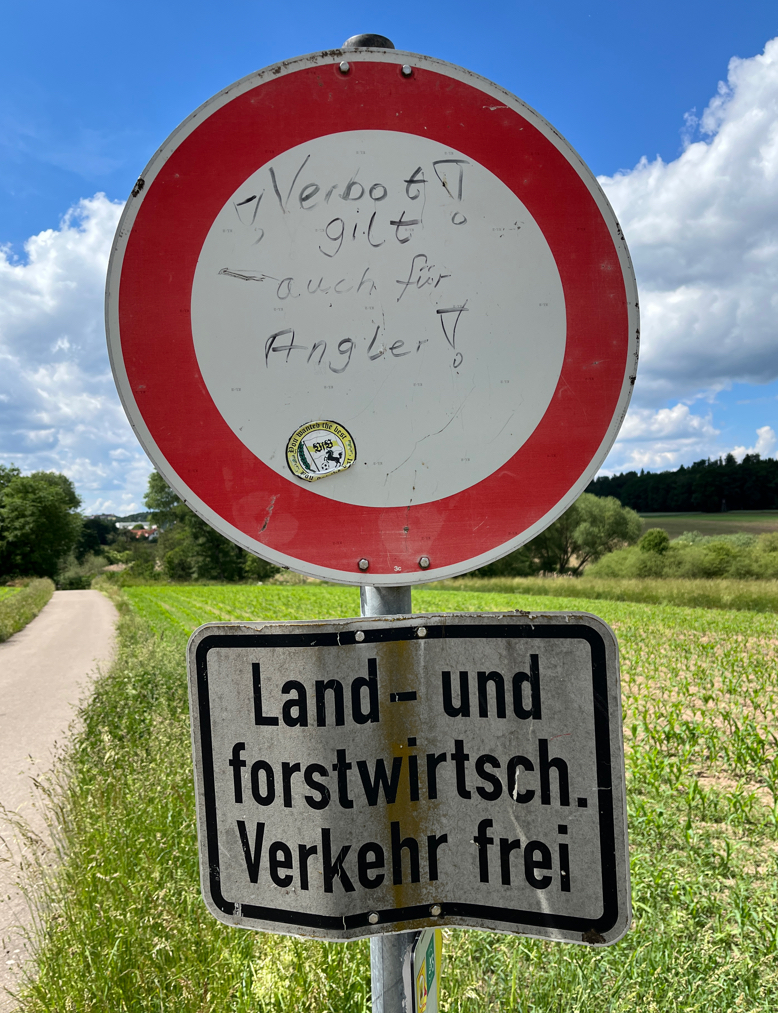
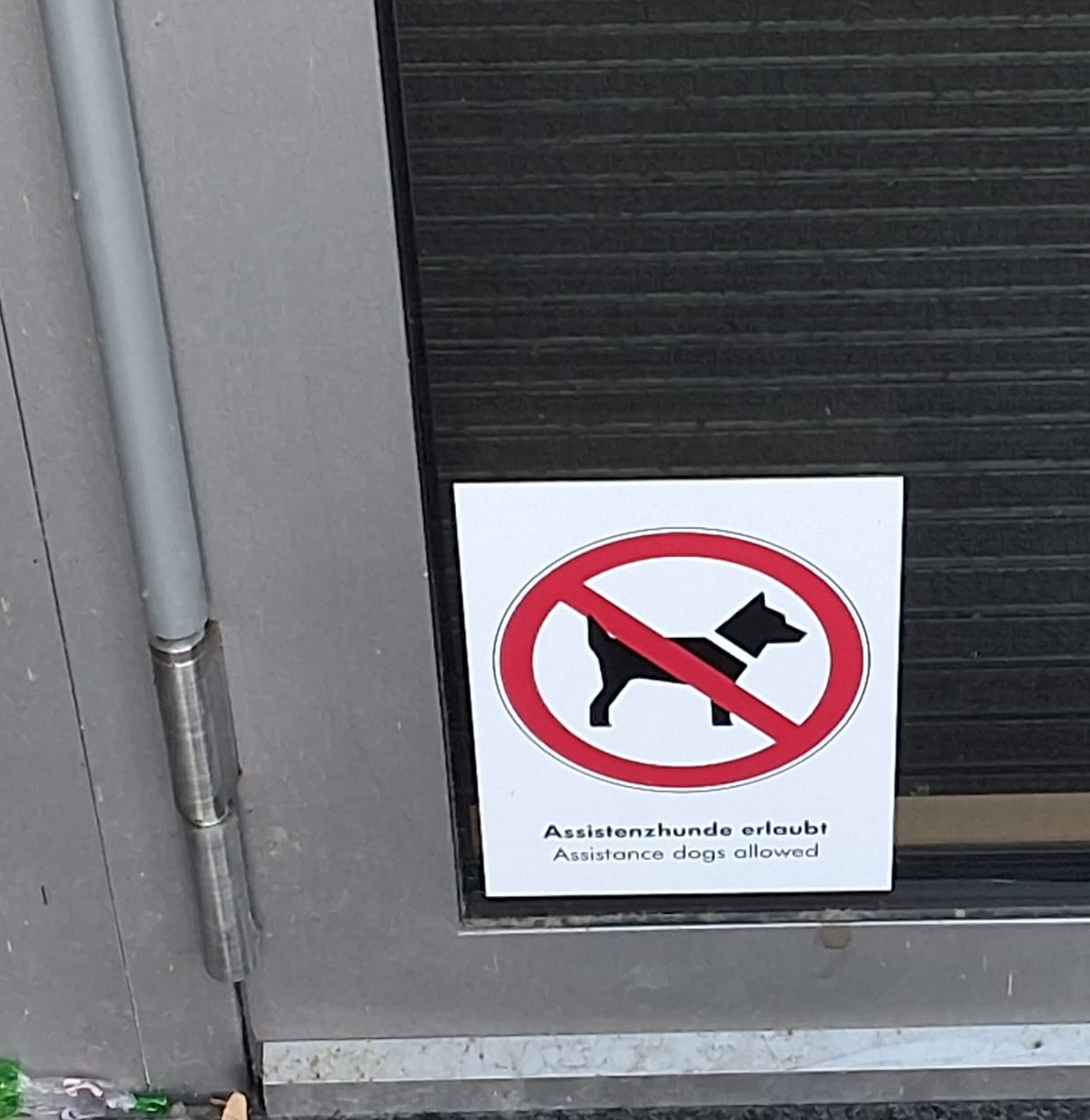
Verbotspictogramm, jedoch in der Bedeutung: Erlaubnis
 Lingscape