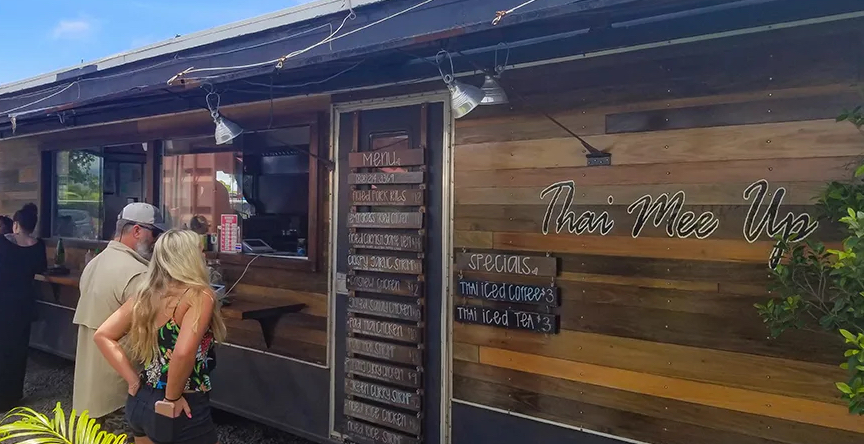
When I went to Thai Mee Up in the Kihei location the first thing I noticed was the Thai writing on the food truck. I eaten there before, but I never really stopped to look at the language on the sign. Seeing the Thai script made me think about how many different cultures and languages are part of everyday life in Hawaiʻi. Even something as simple as a food truck becomes a multilingual space. Being there made me pay more attention to how language shows identity, culture, and community, especially in a place as diverse as Maui.
Multilingual Hawaiʻi
157008
micahbn
United States
Lahaina
—
Multilingual Hawaiʻi
154891
Amelia O
United States
Laie
Pidgin and English
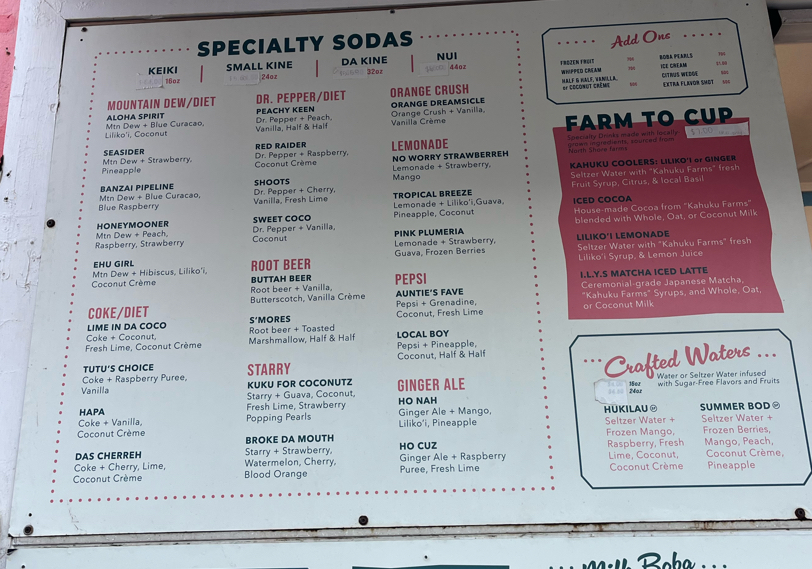
At the Polynesian Cultural Center, I came across this “Soda Bomb” soda truck. What struck me was that the menu was mainly in English but had incorporated Pidgin elements. For example, the “Shoots,” “Ho Nah,” “Ho Cuz,” “Das Cherreh,” and “Broke Da Mouth” drinks are all elements/phrases within the Pidgin language. This showed me how businesses use elements such as Pidgin to connect to local customers. The use of Pidgin here reflects the community around it. It made me realize that multilingualism also represents culture, and that language choices in public spaces can make people feel recognized and embodied.
Multilingual Hawaiʻi
43378
United States
Laie
SK
Multilingual Hawaiʻi
39047
United States
Laie
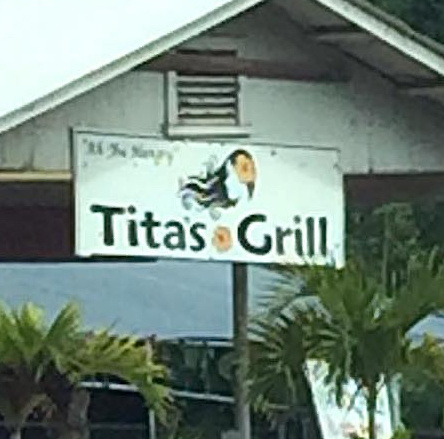
tita's grill
Multilingual Hawaiʻi
38968
United States
Mānoa
—
Multilingual Hawaiʻi
42519
United States
Mililani
SM
Multilingual Hawaiʻi
25909
United States
Mililani
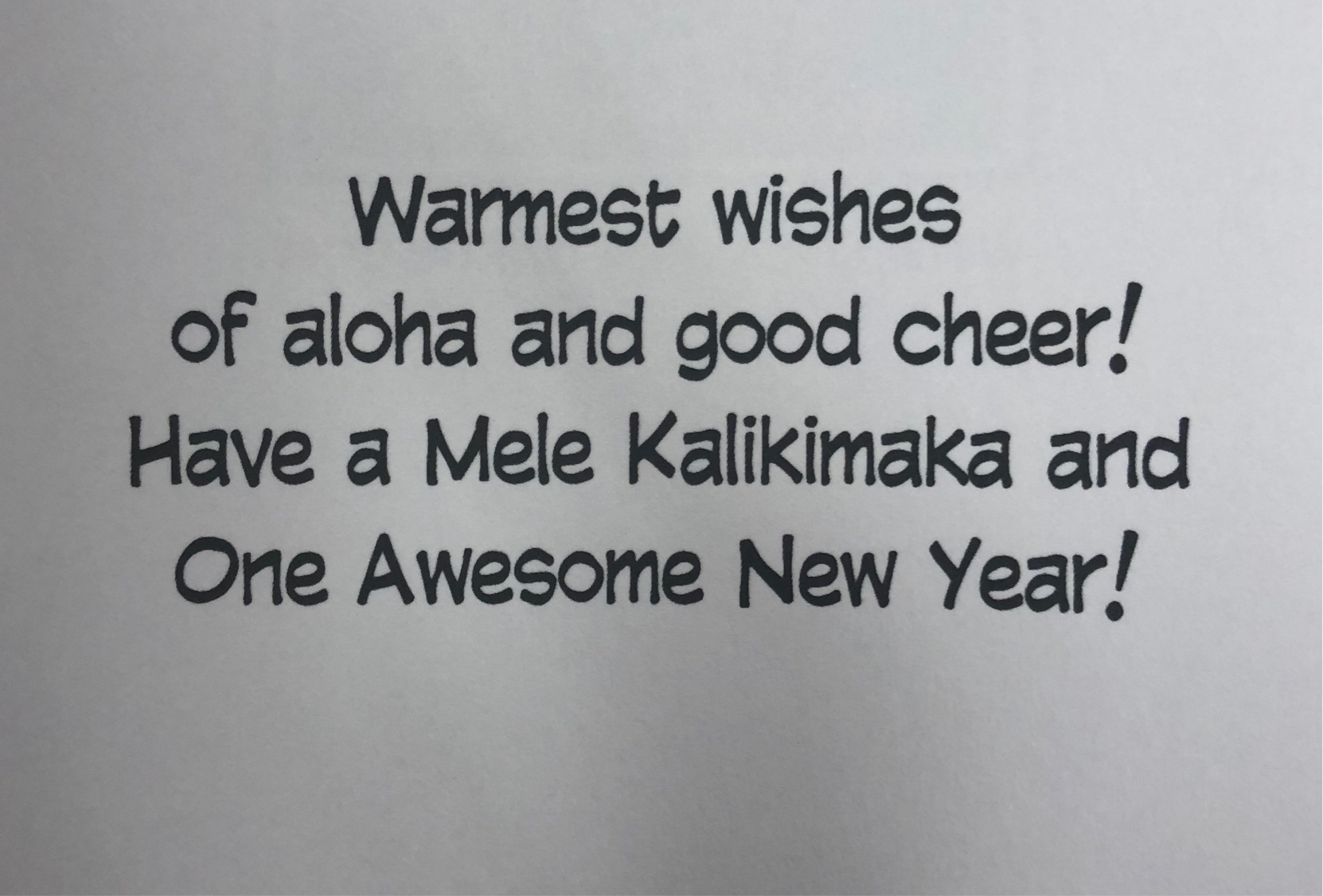
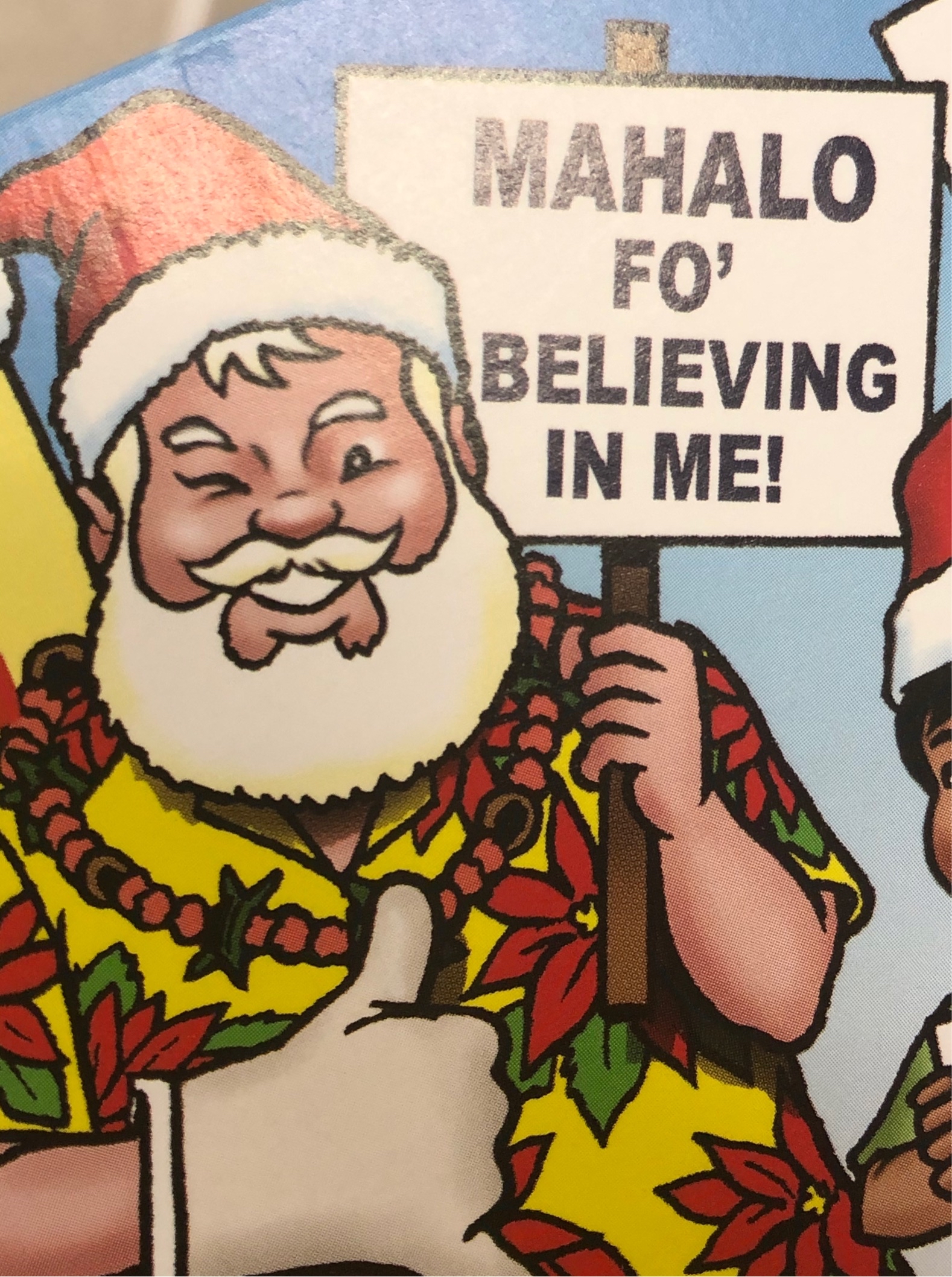
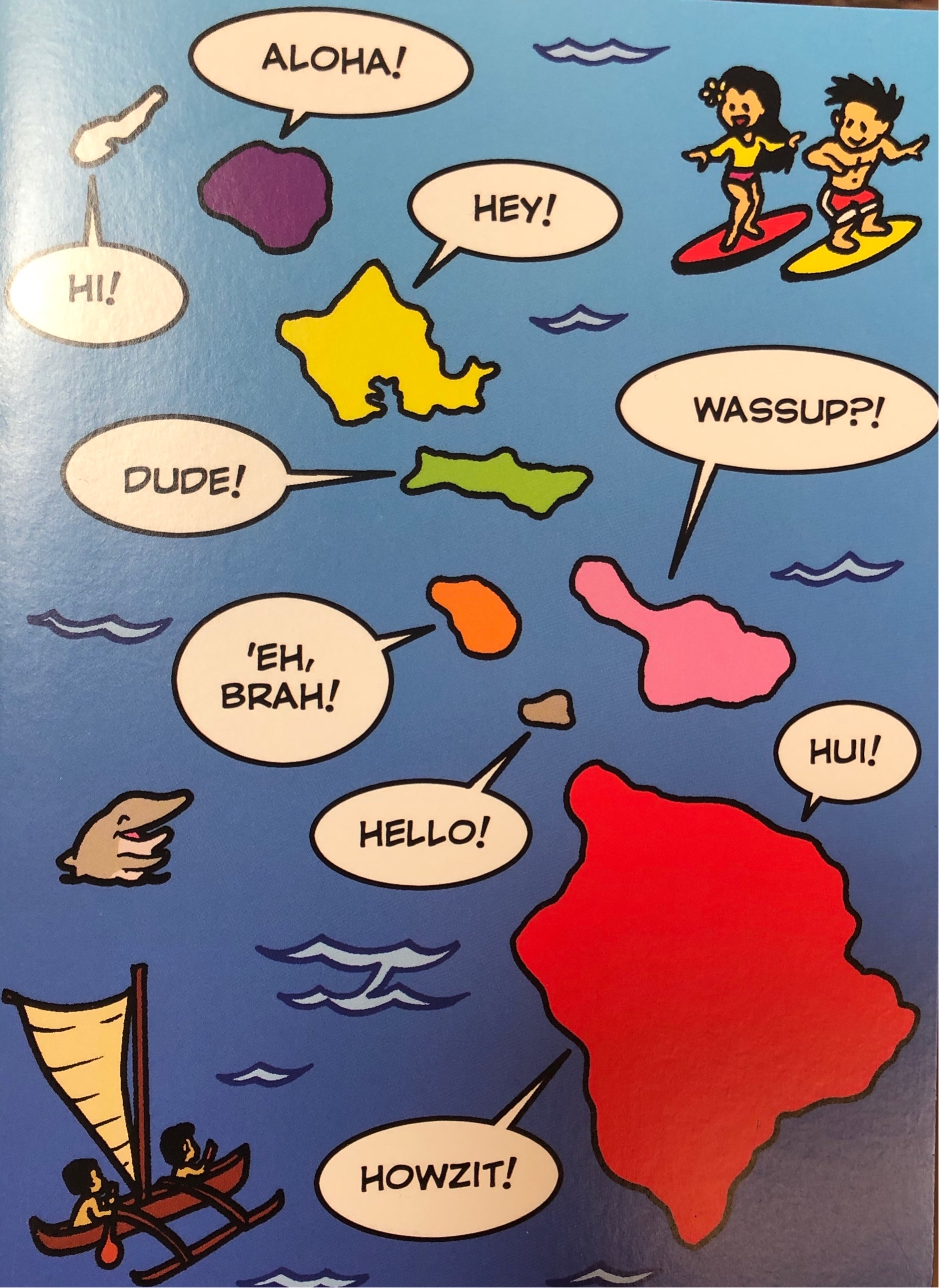
Christmas card found in longs drugs. Can be both symbolic synthetic or authentic. JAS
Multilingual Hawaiʻi
25910
United States
Mililani
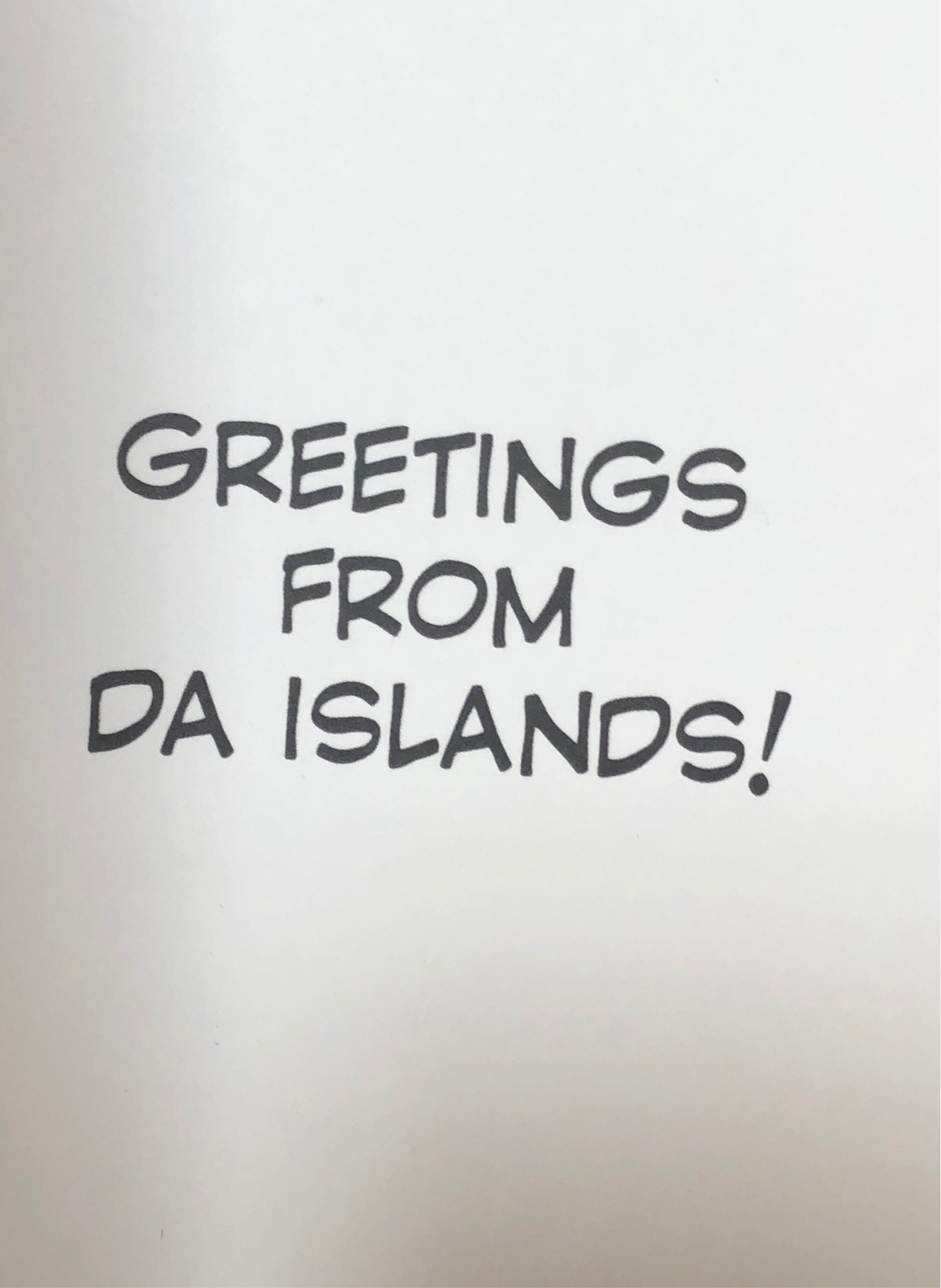
Christmas. card from longs drugs. Symbolic synthetic. Don’t know anyone who says this to someone on Christmas. JAS
Multilingual Hawaiʻi
47197
United States
Mililani
EL-S Checkup #3: The Hawaiian being used is Kuahelani, it’s letting you know what road you are on and where you are heading. The domain is the road heading towards Mililani. The audience is drivers and depending on if they want to head towards Mililani or going back to Waikele.
Multilingual Hawaiʻi
39029
United States
Mililani
—
Multilingual Hawaiʻi
38802
United States
Mililani
—
Multilingual Hawaiʻi
38803
United States
Mililani
—
Multilingual Hawaiʻi
108707
ryansunada
United States
New York
—
Multilingual Hawaiʻi
108708
ryansunada
France
Paris
—
Multilingual Hawaiʻi
46082
United States
Pearl City
EL-S Checkup #2 : Pidgin is being used. All of the fonts are mostly the same size. The audience is for those who are grocery shopping. The domain is a grocery store. The sign is telling the people what kind of food that is being sold to them for what price.
Multilingual Hawaiʻi
25912
United States
Pearl City
Welcome card from Walmart. Synthetic symbolic. Don’t know any local person who says this. JAS
Multilingual Hawaiʻi
25913
United States
Pearl City
Another card from local kine cards at Walmart. I don’t even know the purpose of this card. Symbolic synthetic. JAS
Multilingual Hawaiʻi
25914
United States
Pearl City
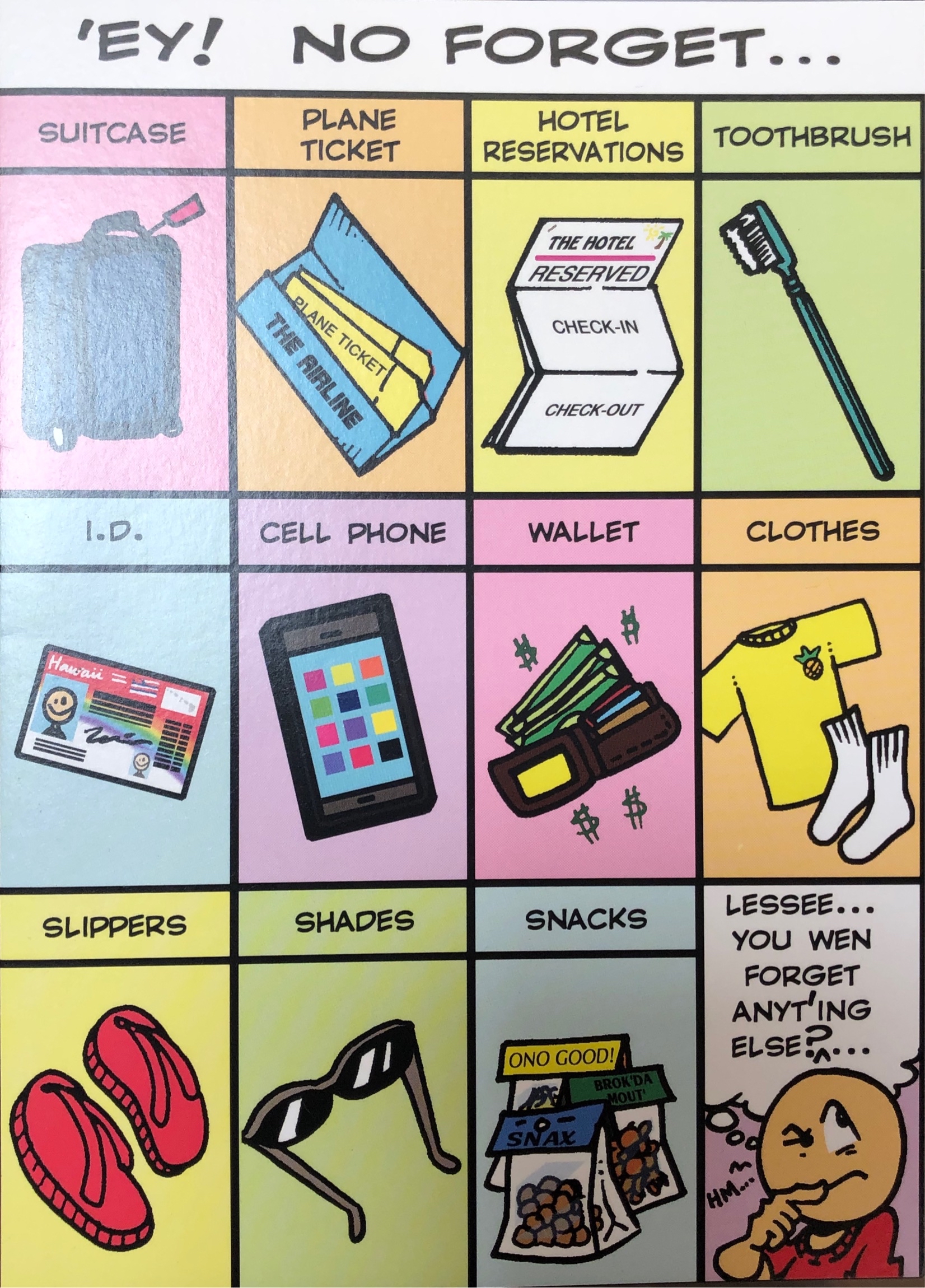
Card meant to be given to someone going away on a trip. Symbolic synthetic. JAS
 Lingscape