MURALLA DE CÁCERES: Wall of Cáceres
RESTAURACIÓN FASE 1: Restoration Phase 1
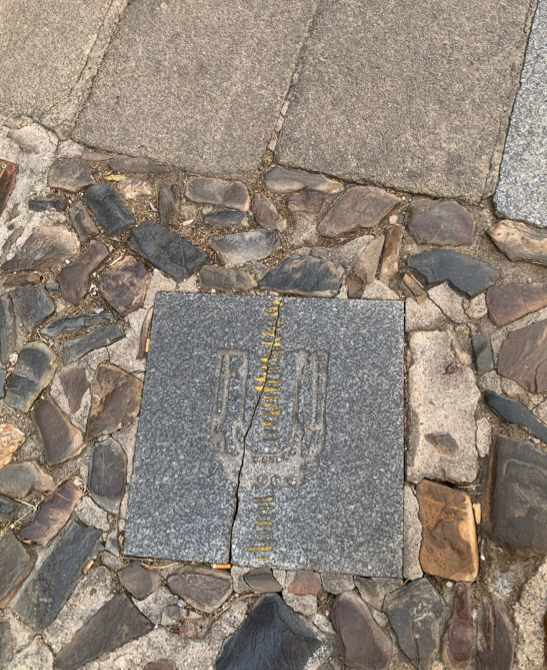
OLIVAR DE LA JUDERÍA – ARCO DE CRISTO: this indicates the section of the walls that was restored:
Olivar de la Judería (the olive grove of the Jewish Quarter, an area near the Judería Vieja).
Arco de Cristo (Christ’s Arch), one of the historic gates of the old city, originally Roman and later part of the medieval wall.
Mº de Cultura – Noviembre 1989: the restoration was carried out by the Spanish Ministry of Culture in November 1989.
At the bottom: official seals/logos of the Spanish Government, Junta de Extremadura, and Ayuntamiento de Cáceres.
The central design: a simple outline of the Cáceres wall, showing the restored section.
PALRA
136073
Laura_Pizarro_Jacinto
Spain
Cáceres
—
PALRA
136329
Laura_Pizarro_Jacinto
Spain
Cáceres
—
PALRA
136074
Laura_Pizarro_Jacinto
Spain
Cáceres
—
PALRA
136330
Laura_Pizarro_Jacinto
Spain
Cáceres
—
PALRA
136331
Laura_Pizarro_Jacinto
Spain
Cáceres
—
PALRA
136076
Laura_Pizarro_Jacinto
Spain
Cáceres
—
PALRA
136332
Laura_Pizarro_Jacinto
Spain
Cáceres
—
PALRA
136077
Laura_Pizarro_Jacinto
Spain
Cáceres
—
PALRA
136333
Laura_Pizarro_Jacinto
Spain
Cáceres
Spanish:
“CAMINOS DE SEFARAD – RED DE JUDERÍAS DE ESPAÑA” : “Routes of Sefarad, Network of Jewish Quarters of Spain”
“CÁCERES” : identifies the city
Hebrew word in the center:
The large letters spell ספרד (Sefarad), which is the Hebrew word for Spain. In Jewish tradition, Sefarad is the name for the Iberian Peninsula, where Sephardic Jews lived until their expulsion in 1492.
Cáceres is a member of the Red de Juderías de España, an association of cities preserving their Jewish heritage. The plaque is placed in the Jewish Quarter (Judería Vieja, Barrio de San Antonio) to signal its historical importance. It helps visitors follow the Sephardic heritage route, which includes the San Antonio Hermitage (former synagogue), traditional houses, and alleys where Jewish families once lived.
https://redjuderias.org/
https://caminosdesefarad.com/
PALRA
136078
Laura_Pizarro_Jacinto
Spain
Cáceres
—
PALRA
136334
Laura_Pizarro_Jacinto
Spain
Cáceres
Ceramic tile in the Hermitage of San Antonio (formerly a synagogue) in the Barrio de San Antonio, Cáceres depicts Saint Anthony of Padua with the Child Jesus.
Saint Anthony of Padua: shown as a Franciscan, wearing a brown habit, with a halo, holding the Child Jesus in his arms. The Child Jesus: also with a halo, blessing or holding a symbol (often a book or cross).
Lily branch in St. Anthony’s left hand: a classic attribute, symbol of purity.
Cloud with cherub heads under his feet: sign of holiness and heavenly glory.
Baroque-style ceramic frame with black floral motifs on a white background, reinforces the Christian dedication of the former synagogue to Saint Anthony.
Saint Anthony of Padua is the patron of many hermitages and popular neighborhoods in Spain. The placement of devotional ceramic tiles on facades and hermitages became a widespread tradition from the 17th century onward, especially in Extremadura and Andalusia, so that neighbors and passersby could entrust themselves to the saint.
PALRA
136079
Laura_Pizarro_Jacinto
Spain
Cáceres
—
PALRA
136335
Laura_Pizarro_Jacinto
Spain
Cáceres
—
PALRA
136080
Laura_Pizarro_Jacinto
Spain
Cáceres
—
PALRA
136336
Laura_Pizarro_Jacinto
Spain
Cáceres
—
PALRA
136081
Laura_Pizarro_Jacinto
Spain
Cáceres
—
PALRA
136337
Laura_Pizarro_Jacinto
Spain
Cáceres
house in the Barrio de San Antonio, part of the Old Jewish Quarter (Judería Vieja) of Cáceres.
Whitewashed walls with simple rectangular windows: very typical of traditional houses in the old Jewish quarter. They were generally modest, unlike the stone palaces in the Christian noble part of the city.
Swallow/bird decorations: these are modern interventions, like in the previous photos. They symbolize freedom, memory, and the flight of the Sephardic Jews who had to leave Cáceres after the expulsion of 1492. They are also part of cultural/artistic projects to bring life and color to the neighborhood.
Iron window grilles (rejas): common in Cáceres architecture, giving both protection and ventilation.
Flower pots in the window: another traditional touch of the popular quarters in Extremadura.
This street is part of the Sephardic route of Cáceres, highlighting the homes where Jewish families once lived. After 1492, many converted Jews (conversos) stayed here, and the quarter remained a humble, tightly packed neighborhood. Today, projects like Caminos de Sefarad and local artistic installations (like the swallows) help visitors connect the present life of the neighborhood with its Jewish past.